
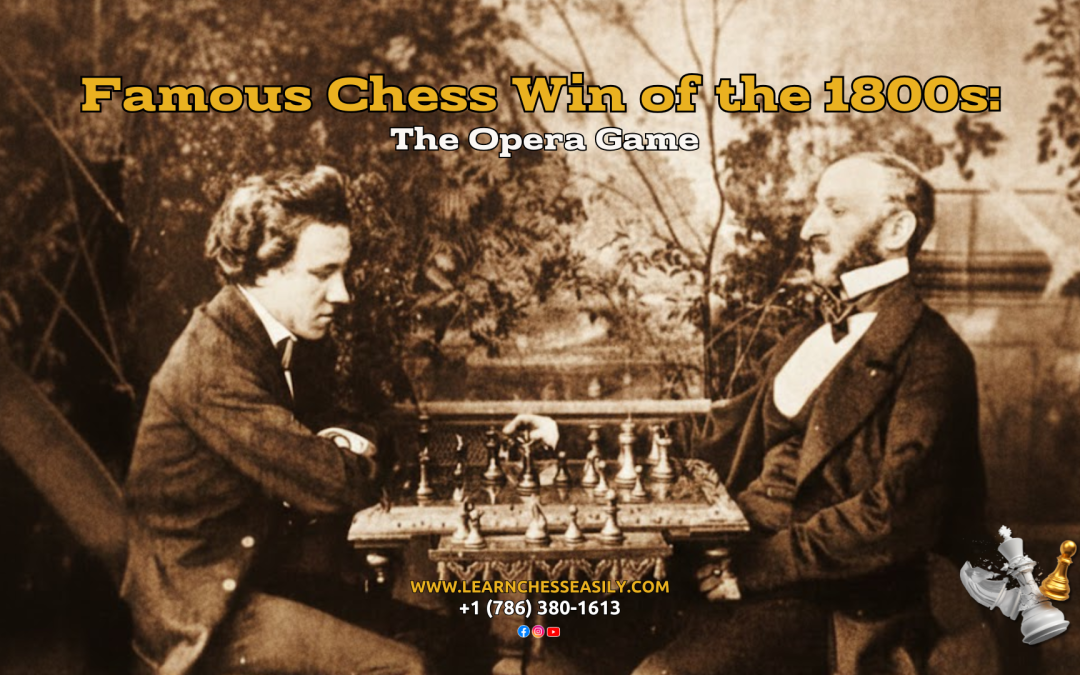
Morphy vs. Löwenthal, 1858
.
One of the most famous chess wins ever played is called “The Opera Game.” Paul Morphy played it in Paris in 1858 — and it’s still one of the best games for beginners to study.
Morphy didn’t win with “luck.” He won because he followed one simple rule:
✅ Bring your pieces out quickly. Don’t waste time.
He developed his pieces, opened the center, and attacked the king before Black was ready.
That’s what winning chess looks like.
✅ Beginner Takeaway
Before move 10, try to develop:
♞ Both Knights
♝ Both Bishops
👑 Castle to keep your king safe
When your pieces show up early, chess becomes easier. Assign your pieces to the correct squares so they participate together. This creates both your defense and your attacking potential.
By developing his knights and attacking the center on the 3rd move, Morphy takes basic steps to control the center of the board.
The light square bishop crosses into Morphy’s territory and he immediately forces it to make a decision: take the knight or lose e5 pawn. The rule of protecting your territory is a strong principle in chess:
✅ Don’t allow your opponent permission on your side of the board without being challenged.
🎯 Pressure + Development = Opportunities
Consistent pressure while developing your pieces allows you to seize opportunities on the board.
We see this when Morphy plays Bc4 — creating an immediate checkmate threat.
Black has to respond.
Black’s knight blocks, but White’s queen continues the pressure on f7, forcing the Black queen to block and slowing Black’s bishop development.
Throughout the game, you’ll find great tactics and learn many ways to organize your pieces.
💬 Question: What’s harder for you in the opening: developing pieces fast or remembering to castle?
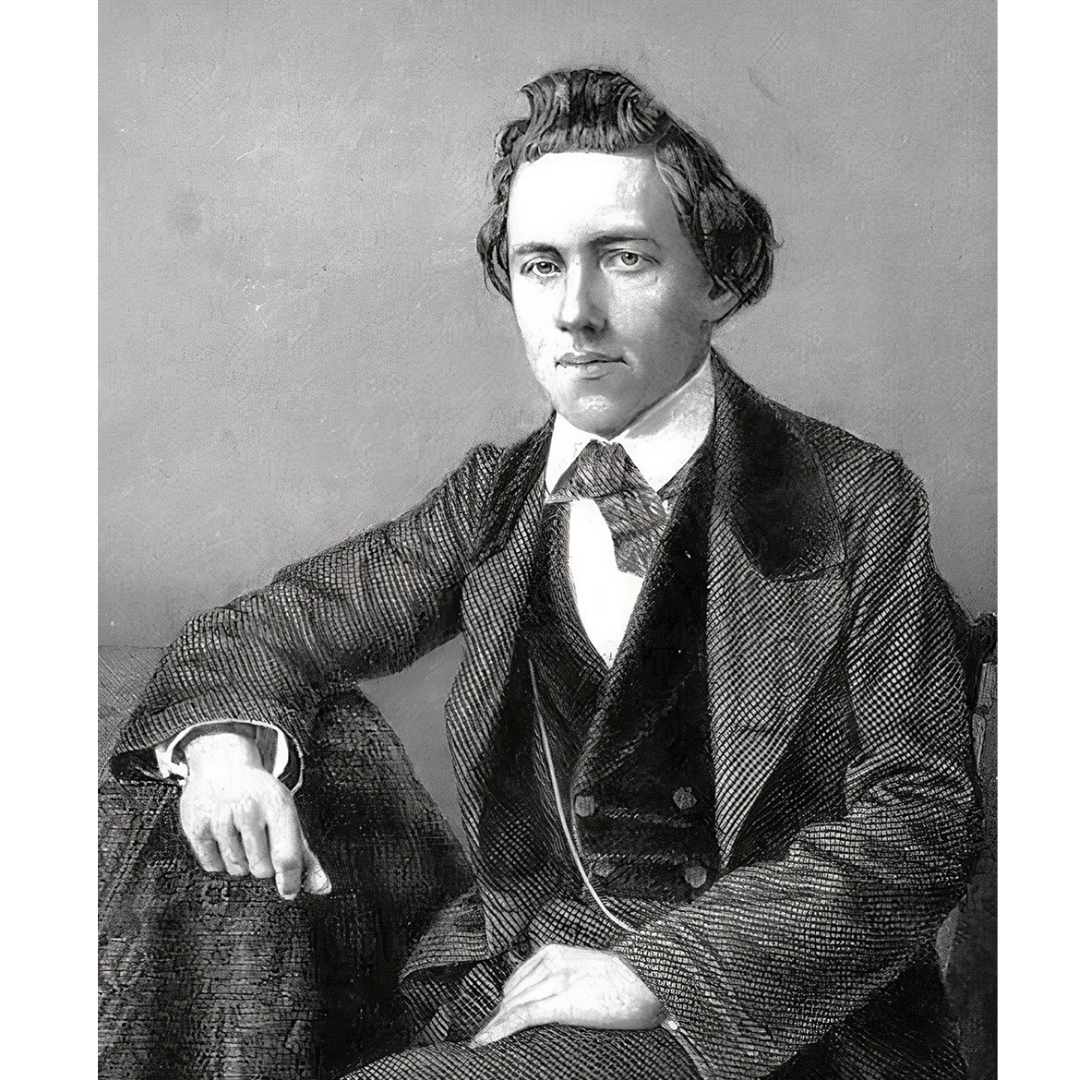
Engraving of Morphy, by Daniel Pound




 English
  Spanish